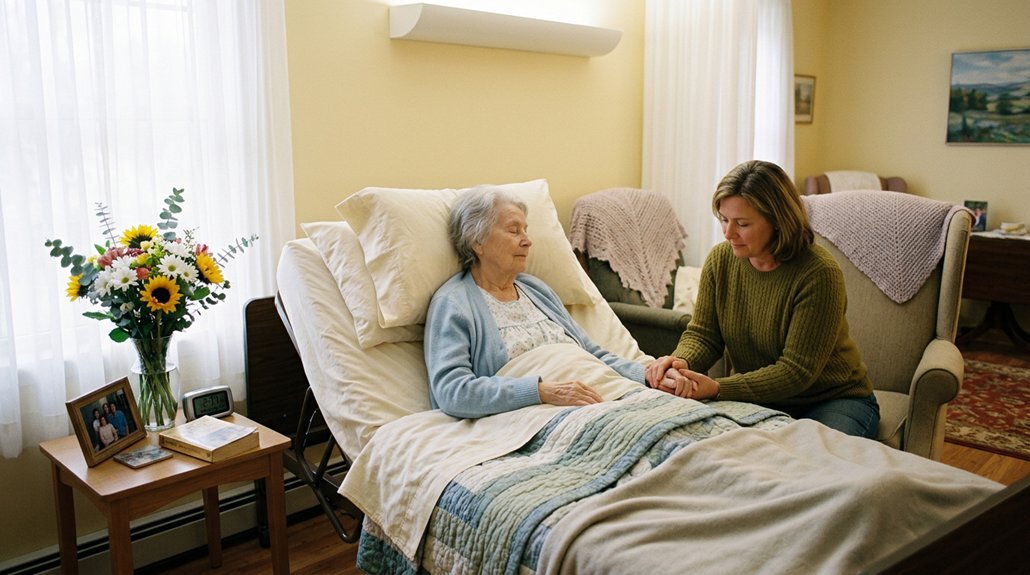
You qualify for hospice care if you have a terminal illness with a prognosis of six months or less to live, as certified by two physicians. Eligibility isn't limited to one disease—it covers conditions like advanced cancer, end-stage heart disease, COPD, and dementia. The focus shifts from curative treatments to comfort, pain management, and dignity. If you outlive the six-month estimate, you don't lose eligibility. Below, you'll find exactly how each condition and certification step works.
Key Takeaways
- Patients qualify for hospice care when two physicians certify a terminal illness with a likely prognosis of six months or less.
- Eligibility focuses on comfort-centered care rather than curative treatment, emphasizing pain management, dignity, and emotional well-being.
- Specific conditions like advanced cancer, NYHA Class IV heart disease, severe COPD, and Stage 7 dementia have defined eligibility criteria.
- Physical decline indicators such as unintentional weight loss, increased dependence, recurring infections, and breathing difficulties support hospice eligibility.
- Patients are regularly reassessed at 90-day and 60-day intervals and remain eligible even if they survive beyond six months.
What Does It Mean to Qualify for Hospice Care?
 .
.
Qualifying for hospice care doesn't hinge on a specific diagnosis or reaching a certain age—it's rooted in a medical assessment that confirms a patient's illness is likely to result in death within approximately six months if it follows its expected course. Both the hospice medical director and the patient's own physician must certify this prognosis after reviewing clinical status, medical history, and physical examination findings. Eligibility is regularly reassessed by the hospice team, and care can be paused or discontinued if a patient's condition stabilizes or improves. At its core, qualification signals a meaningful shift in goals. You're moving away from curative treatments and toward patient centered care that prioritizes comfort measures, symptom management, and quality of life. This transition honors what matters most—meaningful time with loved ones, relief from burdensome interventions, and dignity throughout the journey you're helping families navigate.
The Six-Month Prognosis Rule, Explained
One of the most common questions families ask centers on the six-month prognosis requirement—and it's often misunderstood. Among the most prevalent prognosis misconceptions is that a physician predicts exactly when someone will die. Instead, this guideline reflects a doctor's professional judgment that if the illness follows its natural course, life expectancy is six months or less. This timeframe exists so patients can access hospice benefits early enough to receive meaningful physical, emotional, and spiritual support. It applies broadly to a range of conditions, including end-stage heart disease and advanced cancers. If your loved one lives beyond six months, they won't lose eligibility. Physicians reassess at regular intervals—first at 90 days, then every 60 days—confirming whether comfort-focused care remains appropriate. You're never penalized because someone you love defies expectations.
Who Qualifies for Hospice With Cancer?
 .
.
Because cancer follows such varied trajectories, physicians rely on specific tools to determine when someone qualifies for hospice. The ECOG scale measures functional decline—a score of 2 or higher generally supports eligibility, while scores above 3 correlate with roughly three months of median survival. Similarly, a Palliative Performance Scale score of 70% or lower signals eligibility when patients spend increasing time in bed or confined to one room. The treatment transition marks a pivotal shift. When you're supporting someone moving from curative goals to palliative care, you're helping them prioritize comfort, pain management, and emotional well-being. Some treatments like radiation for pain relief may continue. An individualized care plan is developed to address each patient's specific symptoms, goals, and preferences throughout this transition. Two physicians must certify the terminal diagnosis, confirming a life expectancy of six months or less based on clinical assessment and medical records.
Who Qualifies With Heart Disease, COPD, or Dementia?
Unlike cancer, heart disease, COPD, and dementia don't follow predictable decline patterns—they often involve long plateaus interrupted by sudden crises, making hospice timing harder to pin down. For heart disease, you're looking at NYHA Class IV status—where symptoms persist even at rest despite optimal treatment with diuretics and vasodilators. An ejection fraction of 20% or less and treatment-resistant arrhythmias strengthen the case. With COPD, severe COPD symptoms like disabling dyspnea at rest, FEV1 below 30% predicted, and dependence on long-term oxygen therapy signal eligibility. Frequent exacerbations, unintentional weight loss exceeding 10%, and cor pulmonale indicate terminal decline. For dementia, reaching Stage 7 on the FAST Scale indicates end-stage Alzheimer's disease and supports hospice eligibility, particularly when combined with co-morbid conditions or secondary complications like recurrent infections. For both conditions, you'll need two physicians to confirm a six-month prognosis, and the patient shouldn't be a candidate for curative interventions.
What Physical Signs Support Hospice Eligibility?
 .
.
Beyond specific disease criteria, physicians evaluate universal physical signs that signal terminal decline across all diagnoses. These indicators help determine when curative treatment no longer serves your loved one's best interests. Physical decline manifests as unintentional weight loss exceeding 10% of body weight over three to six months, ill-fitting clothes, and decreased skin turgor. Dropping serum albumin and cholesterol levels confirm nutritional deterioration that can't be reversed. Decreased appetite or reduced nutritional intake is often directly related to the terminal condition rather than a temporary or treatable issue. You'll also notice functional changes—increasing dependence on others for bathing, dressing, feeding, and mobility. Your loved one may spend more time in bed and show declining energy levels. Recurring infections, progressive breathing difficulties unresponsive to treatment, and frequent emergency visits further support eligibility. These signs collectively tell physicians that hospice care best serves your loved one's remaining journey.
How Do Doctors Certify a Patient for Hospice?
Once your loved one's medical team agrees that hospice is appropriate, a formal certification process begins. Two physicians must sign the initial certification: the hospice medical director and your loved one's attending physician, who must hold an M.D. or D.O. degree. These physician roles ensure accountability and medical accuracy. Each physician certifies that your loved one has a life expectancy of six months or less if the illness follows its normal course. This certification process requires clinical documentation supporting the terminal prognosis, including medical records that establish baseline health status and demonstrate disease progression. The certification must also include an individualized narrative explaining the clinical findings that support the prognosis, as standardized templates are not accepted. Neither you nor the physicians face penalties if your loved one lives beyond six months. The certification reflects professional clinical judgment, not an exact prediction.
What to Do Once You Understand the Eligibility Criteria
C:\Users\mitch\OneDrive\Desktop\zimmwriter\output\Who_Qualifies_for_Hospice_Care_Understanding_the_Eligibility_Requirements_0004.jpg After both physicians certify your loved one's eligibility, you'll want to move quickly from understanding the requirements to taking concrete action. Contact a hospice provider directly to schedule an in-home consultation where you can discuss specific care needs, comfort goals, and Medicare coverage details. Use Medicare's Care Compare tool to find Medicare-certified providers in your area before scheduling that initial consultation. Your next steps should include gathering medical records, preparing the home environment with proper equipment and safety modifications, and verifying insurance benefits and benefit period structures. Family involvement is essential during this transition. Schedule a meeting with everyone who'll share caregiving responsibilities. Identify your primary caregiver, establish clear communication protocols, and arrange grief support services early. Educate each family member on symptom recognition and daily care tasks so your loved one receives consistent, compassionate support from the start.